DIY Probate vs Using a Solicitor
Checked against current GOV.UK probate and Inheritance Tax guidance for England & Wales (2026/27).
- There is no legal requirement to use a solicitor — DIY probate is common for simple estates.1
- DIY costs the £526 court fee (estates over £5,000) plus copies; solicitors charge fees on top, sometimes a percentage of the estate.2
- Consider professional help for IHT400 estates, disputes, trusts, businesses or overseas assets.3
- You can instruct a solicitor for just the grant, and do the rest yourself, to keep costs down.1
Most straightforward estates can be handled without a solicitor — the online service is built for executors to use directly. The question is really about complexity and your appetite for the paperwork, not about what is 'allowed'.1
Quick answer
For a straightforward estate — clear will, no disputes, UK assets only, below the inheritance tax threshold — DIY probate is entirely feasible and saves thousands of pounds. For complex estates with overseas assets, trusts, or disputes, a solicitor is usually worth the cost. A hybrid approach — doing most yourself and using a solicitor for specific tasks — is also common.
When you are named as executor, one of the first decisions you face is whether to manage probate yourself or instruct a solicitor. Neither is automatically the right call. It depends on the complexity of the estate, your available time, and how comfortable you are with an unfamiliar administrative process.
Below is a balanced view of both routes - costs, what each involves in practice, and when a hybrid approach makes the most sense.
The Short Answer
For a straightforward estate - clear will, no disputes, no overseas assets, estate below the inheritance tax threshold, simple mix of property and bank accounts - DIY probate is entirely feasible. Many thousands of executors handle this themselves every year without a solicitor.
For a complex estate - overseas assets, disputed will, trusts, significant IHT, or an executor with very limited time - a solicitor's involvement is likely to be worth the cost.
It is not all-or-nothing either. You can do most of the work yourself and use a solicitor for specific parts where you need expertise.
Side-by-Side Comparison
| Factor | DIY / Yourself | Using a Solicitor |
|---|---|---|
| Cost | £526 court fee + £2 per sealed copy (ordered with the application) + your time | £1,500–£3,500+ fixed fee, or 1–4% of the estate value - plus the £526 court fee |
| Time input from you | Significant - you manage every task, correspondence, and decision | Lower, but you still need to provide documents, sign forms, and make decisions |
| Best suited to | Straightforward estates: clear will, no disputes, UK assets only, below IHT threshold | Complex estates: overseas assets, disputes, trusts, significant IHT, executor with no time |
| Flexibility | You control the pace and approach; can instruct professionals for specific tasks | Depends on the firm; some offer a full-service only, others unbundle |
| Professional indemnity | None - you bear executor liability personally | Solicitor carries professional indemnity insurance for their work |
| Recommended when | Estate is simple, you have time, you are comfortable being methodical | Estate is complex, there are disputes or overseas assets, or executor has no capacity |
Understanding the Costs
DIY probate costs
If you handle probate yourself, the fixed costs are:
- £526 - the Probate Registry court fee (for estates over £5,000)
- £2 per sealed copy of the grant when ordered with the application (£16 each if ordered later) - order at least one per institution, typically 5–10 for most estates
- Valuation costs - a RICS probate valuation for property may cost £200–£400 depending on location and property type
- Any specialist fees for specific tasks (e.g. conveyancer for property transfer, accountant for IHT)
Your time is not free. For a typical estate, expect 30–60 hours spread over several months - gathering documents, writing to institutions, preparing accounts, managing the distribution. See our guide to probate costs for a full breakdown.
Solicitor costs
Solicitor fees vary widely. Common structures are:
- Fixed fee - many firms offer fixed fees, typically £1,500 to £3,500 for a simple estate, more for complex ones
- Percentage of estate - some firms charge 1–4% of the gross estate value, which on a £400,000 estate could mean £4,000–£16,000
- Hourly rate - for some firms or for ad hoc advice, rates typically run at £200–£350 per hour
All solicitor fees are charged in addition to the £526 court fee. The firm does not absorb that cost.
When comparing quotes, ask whether the fee is fixed or estimated, what it includes, and what would trigger extras. A percentage-based fee on a large estate can be dramatically higher than a fixed-fee quote for exactly the same work.
Not sure whether this applies to your estate? Take the free Settle assessment - it asks about your specific situation and gives a personalised checklist of next steps.
The Hybrid Approach
DIY versus solicitor is not a binary choice. Many executors handle most of the administration themselves and bring in professionals for specific tasks - often the best balance of cost and assurance.
Common examples include:
- DIY probate application + conveyancer for property. You manage the grant application, notify banks, and handle distribution - but instruct a conveyancer to deal with the legal side of selling or transferring property.
- DIY administration + accountant for IHT. If the estate is close to the IHT threshold or involves complex reliefs, an accountant specialising in estates can prepare the IHT400 while you handle everything else.
- One-off legal advice. Some solicitors offer a fixed-fee consultation to answer specific questions - useful if you hit an issue mid-administration without wanting to hand over the whole case.
Unbundling like this is more common than people realise, and most solicitors are happy to accommodate it. You keep control of costs and still get professional input where it actually matters.
What Settle Is (and Isn't)
Settle is a structured DIY route for executors managing a straightforward estate. It is not a legal advice service, and it does not replace a solicitor where professional advice is genuinely needed.
What Settle provides:
- A task tracker covering every phase of administration, from gathering documents to final distribution
- An institution log to track which banks and organisations you have contacted and where each is up to
- A document checklist based on your specific estate
- Clear, plain-English guidance on each step written for executors, not lawyers
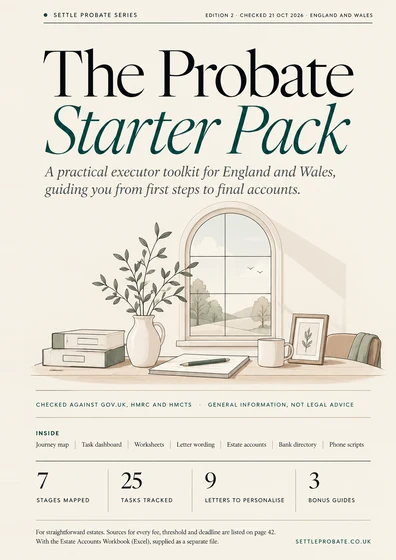
The Settle workspace is available now. The assessment and all guides are free. The Probate Starter Pack (£4.99) gives you a downloadable checklist, estate tracker and letter templates. The Probate Admin Workspace (£9.99) gives you a full online task tracker, institution log, document vault and estate account notes.
If you are weighing up whether to use Settle, a solicitor, or go it entirely alone, our guide to probate without a solicitor covers the DIY route in more detail, and what is probate gives background on the process itself.
When to Instruct a Solicitor
There are situations where a solicitor is clearly the right call, regardless of cost:
- Overseas assets - property or accounts abroad require expertise in foreign legal systems and often need a local lawyer in the relevant jurisdiction
- Disputes or contested will - if anyone is challenging the will or making a claim against the estate, you need legal representation
- Trusts - if the will creates a trust, the ongoing responsibilities as trustee are more complex and ongoing
- Complex inheritance tax - large estates, business property relief, agricultural relief, or other specialist reliefs benefit from professional tax advice
- No capacity - if you genuinely do not have the time or ability to manage the process, outsourcing is a rational choice, not a sign of failure
Be honest about the estate's complexity - and your own situation. If you are unsure, a first consultation with a solicitor costs very little and can make the picture much clearer.
Ready to get a clearer picture of your estate? Take the free Settle assessment - it's free, takes 2 minutes, and needs no account. You'll get a personalised view of what's involved and what route makes sense for you.
For a full cost breakdown across the different options, see our guide to probate costs. For a step-by-step view of the full process, see our how to apply for probate guide.
Common mistakes to avoid
- Paying a percentage fee without asking. Some firms charge a percentage of the estate; a fixed fee is often cheaper — ask.2
- Going DIY on a complex estate. IHT400, trusts or disputes are where mistakes get expensive.3
- Underestimating the time. DIY saves money but takes hours of admin over several months.1
Frequently asked questions
Do I need a solicitor for probate?
No. Many executors handle probate themselves, especially for simple estates. A solicitor is worth it for complex or disputed estates.1
How much does DIY probate cost?
The £526 court fee for estates over £5,000, plus £2 per sealed copy ordered with the application. There is no fee for estates of £5,000 or less.2
How much do solicitors charge?
Either a fixed fee or a percentage of the estate. Percentages can run into thousands, so compare quotes and ask for a fixed fee.2
When is a solicitor worth it?
For estates needing IHT400, disputes over the will, trusts, business interests or overseas assets.3
Can I use a solicitor just for the grant?
Yes. You can instruct a firm to obtain the grant only, then complete the administration yourself.1
Sources & references
The figures and rules in this guide are drawn from the official UK government pages below. Each link opens the relevant GOV.UK page. Always confirm current figures on GOV.UK before you act, as fees and thresholds can change.
- Applying for probate — GOV.UK
- Applying for probate: Fees — GOV.UK
- Dealing with the estate of someone who's died — GOV.UK
Starter Pack · £4.99 — a 44-page printable executor toolkit with a 25-step checklist, nine letters to personalise and an Excel estate accounts workbook.
See what’s inside →Free
Check what applies to this estate
Answer 7 questions and get a free probate assessment. No account needed.
Start free assessment →Secure Workspace · £9.99
Know you are ready before you apply
The Workspace's readiness check shows what is in place and what is still missing before you apply on GOV.UK, and your task list keeps everything else in order.
See how the Workspace works →