How Much Does Probate Cost?
Checked against current GOV.UK probate and Inheritance Tax guidance for England & Wales (2026/27).
- The Probate Registry application fee is £526 for estates over £5,000, and nothing for estates of £5,000 or less.1
- Order extra sealed copies of the grant with your application at £2 each — they cost £16 each if you order them later.1
- A straightforward DIY estate usually costs about £565 all in, or about £815 with a formal property valuation (worked example below); a solicitor typically charges £1,500 to 4% of the estate on top.2
- Inheritance Tax is a separate liability, not a probate cost — 40% above the £325,000 nil-rate band.4
Quick answer
The minimum cost of probate is the £526 court fee (for estates over £5,000) plus £2 for each extra sealed copy of the grant ordered with your application. If you use a solicitor, fees typically run from £1,500 to 4% of the estate value. A straightforward estate handled by the executor usually costs about £565 in out-of-pocket expenses, or about £815 with a formal property valuation. This is general guidance — confirm the current fees on GOV.UK.
Doing probate yourself is cheap. The bill that frightens people is almost always the solicitor's, not the court's. Handled by the executor, a straightforward estate costs little more than the £526 court fee — so before you sign anything, it is worth knowing exactly what each part costs and where the money actually goes.
| Route | What you pay |
|---|---|
| Estate of £5,000 or less | No probate fee1 (and often no probate needed) |
| Doing it yourself | £526 fee + £2 per extra copy of the grant + certificates and any valuation: about £565–£815 |
| Solicitor, fixed fee | Often £1,500–£3,500 plus VAT, plus the same £526 fee and costs |
| Solicitor, % of the estate | Often 1–4% of the gross estate plus VAT: £4,000–£16,000 on a £400,000 estate |
| Solicitor, hourly | Around £150–£400 an hour plus VAT |
Solicitor figures are typical ranges, not published rates: always get a written quote. To total your own estate's costs, use our free probate cost calculator.
The court fee (Probate Registry)
The application fee charged by the Probate Registry is straightforward:1
- Estates worth £5,000 or less: No court fee
- All other estates: £526
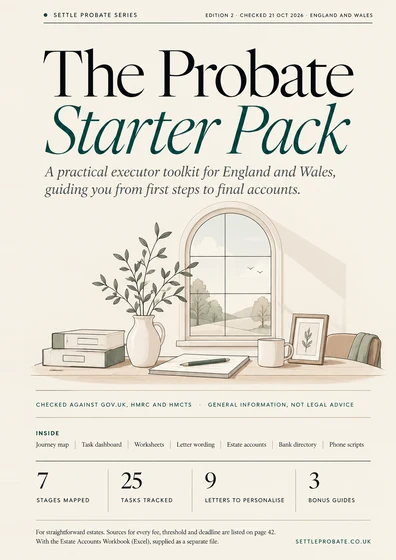
The fee is the same whether the estate is worth £6,000 or £6 million — it is a flat charge, not a percentage.1 You will also want extra sealed copies of the grant, because most banks, investment platforms and HM Land Registry each ask for an original. Here is the bit that trips people up: copies cost £2 each when you order them with the application, but £16 each if you ask for them afterwards.1 Order five to ten upfront — it is the single easiest way to keep costs and delays down. If you want help counting them, the Probate Starter Pack's fees page has a quick count of every organisation that will need an official copy, so you order them all at £2. Always confirm the current fees on GOV.UK before you apply.1
Worked example: what a typical DIY estate costs
A £400,000 estate — a house, two bank accounts and an ISA, one will, no disputes and no Inheritance Tax to pay — handled by the executor:
| Probate Registry application fee1 | £526 |
| 7 extra sealed copies of the grant, ordered with the application (£2 each)1 | £14 |
| Additional death certificates from the register office (£12.50 each) | £25 |
| RICS probate property valuation3 | £250 |
| Typical total | £815 |
Swap the formal valuation for a free estate-agent appraisal where the estate is nowhere near the Inheritance Tax threshold, and the same estate comes in around £565. The same estate handed to a solicitor charging 2% would cost roughly £8,000 plus VAT on top of these disbursements — which is why so many executors do the routine work themselves.
Fee exemption: If the estate is worth less than £5,000, there is no court fee. This threshold was set partly to acknowledge that small estates may not need probate at all, and where they do, the cost should not be prohibitive.
Valuation costs
Before probate can be applied for, the estate must be valued. Some valuations cost nothing (banks provide date-of-death balances free of charge), while others incur fees:
- Property valuation: A formal RICS-qualified probate valuation typically costs £150–£400. This is separate from an estate agent's market appraisal (which is usually free but not suitable for HMRC purposes). Some estate agents offer formal probate valuations - check whether they have a qualified valuer or just an estimate.
- Investment and share valuations: Most investment platforms and share registrars provide date-of-death valuations free of charge or for a small administration fee of £10–£50.
- Contents valuation: For ordinary household contents, a self-assessment using reasonable estimates is usually acceptable for HMRC purposes. For estates containing significant antiques, art, jewellery, or other valuables, a professional valuation from a specialist auctioneer (such as Bonhams or Christie's) may be appropriate. Costs vary widely.
Solicitor fees
If you instruct a solicitor, costs depend on how much work they do. There are three common fee structures:
Percentage of the estate
Many traditional solicitors charge a percentage of the gross estate value - typically 1–4%. For a £300,000 estate, this could mean fees of £3,000–£12,000 plus VAT. The Law Society previously set a scale, but this is no longer used and solicitors are free to charge what they wish. Always ask for a written estimate before instructing anyone.
Fixed fee
Many solicitors and specialist probate services now offer fixed fees for specific tasks or the full process. Fixed fees for a straightforward estate might range from £1,500 to £3,500 plus VAT and disbursements. This is often better value than a percentage fee and makes costs predictable.
Hourly rate
Some solicitors charge by the hour for probate work. Rates vary from around £150 to £400 per hour depending on the firm and the seniority of the person doing the work. For a complex estate this can add up quickly.
Disbursements
Disbursements are costs that the solicitor or executor pays to third parties on behalf of the estate. These are charged in addition to any professional fees:
- Death certificates (from the register office): typically £12.50 per copy
- Probate court fee: £526 (for estates over £5,000)1
- Extra sealed copies of the grant: £2 each with the application, £16 each afterwards1
- Gazette and local newspaper statutory notices: £100–£200
- Land Registry fees (for property transfer or sale): £20–£455 depending on value
- Bankruptcy searches on beneficiaries: around £2 each (commonly required by solicitors)
- Office copy entries from HM Land Registry: £3–£7 each
Inheritance tax
Inheritance Tax is not a cost of probate itself, but it is a significant liability for larger estates. The standard rate is 40% on the value above the nil-rate band of £325,000 per person.4 A residence nil-rate band of up to £175,000 can apply when a home passes to children or grandchildren, and a widow or widower can inherit their late spouse's unused bands — so the effective tax-free threshold is often £500,000 or even £1 million for a couple.4 See our guide to Inheritance Tax for executors for the full detail.
Common mistakes that cost money: ordering grant copies one at a time after the event (£16 each instead of £2); paying for a formal RICS valuation when the estate is nowhere near the IHT threshold and a free appraisal would do; handing the whole estate to a solicitor on a percentage fee when a fixed fee — or doing the routine parts yourself — would cost a fraction; and forgetting that solicitor quotes are usually plus VAT and plus disbursements, not all-in.
DIY probate vs using a solicitor
For a straightforward estate - clear will, no disputes, no complex assets, estate below the nil-rate band - many executors handle probate themselves without any trouble. The government's online application is designed for exactly this situation. See our full comparison at DIY probate vs solicitor.
When DIY makes sense:
- The will is clear and unambiguous
- There are no disputes between beneficiaries
- There is no inheritance tax to pay or report
- Assets are straightforward (bank accounts, ISAs, possibly a property)
- The executor has time to devote to correspondence with institutions
When a solicitor is worth it:
- The estate involves overseas assets, trusts, or business interests
- Inheritance tax is due and the position is complicated
- There are disputes between family members or challenges to the will
- The executor is also a beneficiary and there are concerns about conflicts of interest
- The executor simply does not have the time or confidence to handle a lengthy process
If you decide to use a solicitor, you do not have to hand over everything. You can handle the straightforward parts yourself - gathering balances, notifying institutions - and pay a solicitor only for the parts where you want help, such as property transfers or inheritance tax calculations. This can significantly reduce the overall bill. For more on doing parts yourself, see our guide to probate without a solicitor.
Not sure whether this applies to your estate? Take the free Settle assessment - it takes two minutes and gives you a personalised checklist of next steps.
When to get professional advice
Costs escalate quickly in complex estates. Get professional advice - and a fixed-fee quote before committing - if:
- The estate is above the inheritance tax threshold and the IHT position is not straightforward
- There is a property sale involved and you want the conveyancing handled professionally
- Beneficiaries are asking questions about the administration that you cannot comfortably answer
- A creditor or potential claimant has indicated they may make a claim against the estate
Always get a written estimate before instructing any professional, and ask clearly whether VAT is included and what disbursements are not covered.
Frequently asked questions
How much does probate cost if I do it myself?
For most estates, just the £526 court fee1 plus £2 for each extra sealed copy of the grant ordered with the application. Add a few death certificates and a typical DIY estate comes in around £565 all in, or about £815 if you pay for a formal RICS property valuation.
How much does probate cost?
If you handle probate yourself, the court fee is £526 for estates over £5,000, plus £2 per extra sealed copy of the grant when ordered with the application (£16 each afterwards) — order five to ten. If you use a solicitor, expect to pay £1,500 to £3,500 fixed fee for a simple estate, or 1 to 4% of the gross estate value — plus the court fee on top.
What is the court fee for probate?
The Probate Registry court fee is £526 for estates worth more than £5,000. There is no fee for estates worth £5,000 or less. Extra sealed copies of the grant cost £2 each when ordered with your application, or £16 each afterwards — you need one per institution you deal with. Always confirm the current fees on GOV.UK before you apply.
Can I do probate without a solicitor to save money?
Yes. Many executors handle probate themselves for straightforward estates. There is no legal requirement to use a solicitor. For a clear will, no disputes, no overseas assets, and an estate below the inheritance tax threshold, DIY probate is entirely feasible and can save thousands of pounds.
Is there really no fee for small estates?
Correct. Estates worth £5,000 or less pay no application fee at all.1 Many estates that small do not need probate in the first place — banks often release modest balances on sight of the death certificate and a short form.
Why do solicitors charge so much more?
Because they price the risk and the hours, not just the court fee. A percentage fee of 1–4% on a £400,000 estate is £4,000–£16,000 plus VAT — for administrative work you can largely do yourself if the estate is straightforward. A fixed fee is almost always better value than a percentage.
Can I pay the court fee from the estate?
Yes. Probate costs — the court fee, valuations, statutory notices — are legitimate estate expenses and are reimbursed from estate funds before anything is distributed to beneficiaries. If accounts are frozen, some banks will pay the probate fee and funeral bill directly to the provider.
Who pays the probate fee?
The estate does. Whoever applies usually pays the £526 by card when they apply, then repays themselves from the estate once the money is released; record it as an estate expense. Some banks will pay it from the frozen account before the grant: Nationwide, for example, says it can pay the funeral, the probate fee and Inheritance Tax before probate.
How much money can there be before probate is needed?
There is no single figure. Each bank sets its own limit: £50,000 at Barclays, Santander and Nationwide, but £30,000 at Starling and West Brom. Property in the person's sole name nearly always needs probate. See bank probate thresholds and do I need probate?
How many sealed copies of the grant should I order?
Count the banks, investment platforms, pension providers and the Land Registry you will need to deal with, then order that many with your application at £2 each.1 Five to ten covers most estates. Running out and re-ordering later at £16 each is the expensive way to do it.
Does HMRC charge a probate fee?
No. The probate fee is a court fee paid to HM Courts and Tribunals Service when you apply, not to HMRC.1 It is £526 for an estate over £5,000. HMRC's only part is Inheritance Tax, a separate tax that most estates do not pay. If no tax is due and the estate is "excepted", there is no HMRC form to send either. See our IHT205 guide for what replaced the old form.
Is there a deadline that adds cost?
There is no deadline to apply for probate, but HMRC charges interest on Inheritance Tax paid after the end of the sixth month after the death. See probate time limits.
Does Inheritance Tax come out of the probate fee?
No — they are entirely separate. The £526 is a court charge for the grant. Inheritance Tax, where due, is 40% above the £325,000 nil-rate band4 and is paid to HMRC, usually before the grant is issued. See paying Inheritance Tax before probate.
Sources & references
The figures and rules in this guide are drawn from the official UK government pages below. Each link opens the relevant GOV.UK page. Always confirm current figures on GOV.UK before you act, as fees and thresholds can change.
- Applying for probate: Fees — GOV.UK
- Applying for probate — GOV.UK
- How to value an estate for Inheritance Tax and report its value — GOV.UK
- How Inheritance Tax works: thresholds, rules and allowances — GOV.UK
Starter Pack · £4.99 — a 44-page printable executor toolkit with a 25-step checklist, nine letters to personalise and an Excel estate accounts workbook.
See what’s inside →Free
Check what applies to this estate
Answer 7 questions and get a free probate assessment. No account needed.
Start free assessment →Secure Workspace · £9.99
Know you are ready before you apply
The Workspace's readiness check shows what is in place and what is still missing before you apply on GOV.UK, and your task list keeps everything else in order.
See how the Workspace works →