Official statistics · England and Wales

Probate Waiting Times Tracker

How long the Probate Service takes to issue a grant, every quarter since April 2019, from the Ministry of Justice's own figures.

Latest figures: Apr–Jun 2026, published 24 September 2026. Checked 27 November 2026. Next update due December 2026 (July to September 2026 figures) (how we check).

Quick answer

In Apr–Jun 2026 grants of probate took 5.0 weeks on average (mean) from application to grant, and half arrived within 1.1 weeks (median). Across all grant types the mean was 6.3 weeks. Letters of administration, used when there is no will, took 10.2 weeks on average. Paper applications took 16.0 weeks on average against 4.4 online. GOV.UK says you will usually get probate within 12 weeks of submitting your application.

Latest quarter: Apr–Jun 2026

Probate grants, mean5.0 wks5.2 a year earlier
Probate grants, median1.1 wks1.9 a year earlier
All grants, mean6.3 wks71,076 grants issued
Paper vs online, mean16.0 / 4.4weeks, all grants
Open cases, end of quarter47,00339,357 a year earlier
All grants of representation: weeks from application to grant, Apr–Jun 2019 to Apr–Jun 2026
All grants of representation, weeks from application to grantMean 6.3 weeks in Apr–Jun 2026; Median 1.1 weeks in Apr–Jun 2026. Full figures are in the table below the chart.03691215weeks2020202120222023202420252026Apr–Jun 2019: mean 8.1 weeksJul–Sep 2019: mean 9.8 weeksOct–Dec 2019: mean 8.2 weeksJan–Mar 2020: mean 7.1 weeksApr–Jun 2020: mean 7.1 weeksJul–Sep 2020: mean 7.1 weeksOct–Dec 2020: mean 7.7 weeksJan–Mar 2021: mean 8.1 weeksApr–Jun 2021: mean 7.4 weeksJul–Sep 2021: mean 9.3 weeksOct–Dec 2021: mean 9.0 weeksJan–Mar 2022: mean 8.8 weeksApr–Jun 2022: mean 8.2 weeksJul–Sep 2022: mean 8.6 weeksOct–Dec 2022: mean 9.6 weeksJan–Mar 2023: mean 10.8 weeksApr–Jun 2023: mean 14.9 weeksJul–Sep 2023: mean 15.0 weeksOct–Dec 2023: mean 14.9 weeksJan–Mar 2024: mean 12.9 weeksApr–Jun 2024: mean 10.1 weeksJul–Sep 2024: mean 9.0 weeksOct–Dec 2024: mean 7.9 weeksJan–Mar 2025: mean 6.2 weeksApr–Jun 2025: mean 6.0 weeksJul–Sep 2025: mean 6.4 weeksOct–Dec 2025: mean 6.1 weeksJan–Mar 2026: mean 6.4 weeksApr–Jun 2026: mean 6.3 weeksApr–Jun 2019: median 7.3 weeksJul–Sep 2019: median 8.1 weeksOct–Dec 2019: median 5.7 weeksJan–Mar 2020: median 4.4 weeksApr–Jun 2020: median 4.7 weeksJul–Sep 2020: median 5.0 weeksOct–Dec 2020: median 5.6 weeksJan–Mar 2021: median 4.6 weeksApr–Jun 2021: median 4.4 weeksJul–Sep 2021: median 6.6 weeksOct–Dec 2021: median 6.0 weeksJan–Mar 2022: median 6.0 weeksApr–Jun 2022: median 6.1 weeksJul–Sep 2022: median 6.0 weeksOct–Dec 2022: median 6.7 weeksJan–Mar 2023: median 5.9 weeksApr–Jun 2023: median 11.4 weeksJul–Sep 2023: median 11.9 weeksOct–Dec 2023: median 10.9 weeksJan–Mar 2024: median 8.4 weeksApr–Jun 2024: median 4.1 weeksJul–Sep 2024: median 3.0 weeksOct–Dec 2024: median 2.9 weeksJan–Mar 2025: median 1.6 weeksApr–Jun 2025: median 1.9 weeksJul–Sep 2025: median 2.1 weeksOct–Dec 2025: median 1.7 weeksJan–Mar 2026: median 1.3 weeksApr–Jun 2026: median 1.1 weeksMean 6.3Median 1.1
Grants of probate (there is a will and an executor applies): weeks from application to grant, Apr–Jun 2019 to Apr–Jun 2026
Grants of probate (there is a will and an executor applies), weeks from application to grantMean 5.0 weeks in Apr–Jun 2026; Median 1.1 weeks in Apr–Jun 2026. Full figures are in the table below the chart.03691215weeks2020202120222023202420252026Jul–Sep 2019: mean 9.5 weeksOct–Dec 2019: mean 7.8 weeksJan–Mar 2020: mean 6.7 weeksApr–Jun 2020: mean 6.6 weeksJul–Sep 2020: mean 6.7 weeksOct–Dec 2020: mean 7.2 weeksJan–Mar 2021: mean 7.7 weeksApr–Jun 2021: mean 7.1 weeksJul–Sep 2021: mean 8.9 weeksOct–Dec 2021: mean 8.2 weeksJan–Mar 2022: mean 7.9 weeksApr–Jun 2022: mean 7.2 weeksJul–Sep 2022: mean 7.2 weeksOct–Dec 2022: mean 8.0 weeksJan–Mar 2023: mean 9.2 weeksApr–Jun 2023: mean 13.9 weeksJul–Sep 2023: mean 14.4 weeksOct–Dec 2023: mean 14.1 weeksJan–Mar 2024: mean 11.4 weeksApr–Jun 2024: mean 8.4 weeksJul–Sep 2024: mean 7.4 weeksOct–Dec 2024: mean 6.8 weeksJan–Mar 2025: mean 5.2 weeksApr–Jun 2025: mean 5.2 weeksJul–Sep 2025: mean 5.3 weeksOct–Dec 2025: mean 4.9 weeksJan–Mar 2026: mean 5.0 weeksApr–Jun 2026: mean 5.0 weeksJul–Sep 2019: median 8.0 weeksOct–Dec 2019: median 5.6 weeksJan–Mar 2020: median 4.3 weeksApr–Jun 2020: median 4.6 weeksJul–Sep 2020: median 4.9 weeksOct–Dec 2020: median 5.3 weeksJan–Mar 2021: median 4.4 weeksApr–Jun 2021: median 4.4 weeksJul–Sep 2021: median 6.4 weeksOct–Dec 2021: median 5.4 weeksJan–Mar 2022: median 5.4 weeksApr–Jun 2022: median 5.1 weeksJul–Sep 2022: median 5.0 weeksOct–Dec 2022: median 4.7 weeksJan–Mar 2023: median 4.7 weeksApr–Jun 2023: median 11.1 weeksJul–Sep 2023: median 11.9 weeksOct–Dec 2023: median 10.6 weeksJan–Mar 2024: median 8.1 weeksApr–Jun 2024: median 3.7 weeksJul–Sep 2024: median 2.6 weeksOct–Dec 2024: median 2.9 weeksJan–Mar 2025: median 1.4 weeksApr–Jun 2025: median 1.9 weeksJul–Sep 2025: median 2.1 weeksOct–Dec 2025: median 1.6 weeksJan–Mar 2026: median 1.3 weeksApr–Jun 2026: median 1.1 weeksMean 5.0Median 1.1
Letters of administration (no will): weeks from application to grant, Apr–Jun 2019 to Apr–Jun 2026
Letters of administration (no will), weeks from application to grantMean 10.2 weeks in Apr–Jun 2026; Median 8.9 weeks in Apr–Jun 2026. Full figures are in the table below the chart.0510152025weeks2020202120222023202420252026Jul–Sep 2019: mean 10.7 weeksOct–Dec 2019: mean 9.5 weeksJan–Mar 2020: mean 8.2 weeksApr–Jun 2020: mean 8.3 weeksJul–Sep 2020: mean 8.0 weeksOct–Dec 2020: mean 8.7 weeksJan–Mar 2021: mean 8.3 weeksApr–Jun 2021: mean 7.8 weeksJul–Sep 2021: mean 10.3 weeksOct–Dec 2021: mean 12.2 weeksJan–Mar 2022: mean 11.9 weeksApr–Jun 2022: mean 11.7 weeksJul–Sep 2022: mean 14.9 weeksOct–Dec 2022: mean 15.7 weeksJan–Mar 2023: mean 14.0 weeksApr–Jun 2023: mean 17.5 weeksJul–Sep 2023: mean 15.4 weeksOct–Dec 2023: mean 16.8 weeksJan–Mar 2024: mean 20.0 weeksApr–Jun 2024: mean 15.9 weeksJul–Sep 2024: mean 13.5 weeksOct–Dec 2024: mean 9.8 weeksJan–Mar 2025: mean 8.7 weeksApr–Jun 2025: mean 8.5 weeksJul–Sep 2025: mean 8.9 weeksOct–Dec 2025: mean 9.3 weeksJan–Mar 2026: mean 10.5 weeksApr–Jun 2026: mean 10.2 weeksJul–Sep 2019: median 8.4 weeksOct–Dec 2019: median 6.4 weeksJan–Mar 2020: median 4.9 weeksApr–Jun 2020: median 5.3 weeksJul–Sep 2020: median 5.3 weeksOct–Dec 2020: median 5.9 weeksJan–Mar 2021: median 4.0 weeksApr–Jun 2021: median 4.1 weeksJul–Sep 2021: median 6.4 weeksOct–Dec 2021: median 8.6 weeksJan–Mar 2022: median 9.1 weeksApr–Jun 2022: median 9.4 weeksJul–Sep 2022: median 11.9 weeksOct–Dec 2022: median 13.0 weeksJan–Mar 2023: median 11.3 weeksApr–Jun 2023: median 15.0 weeksJul–Sep 2023: median 12.3 weeksOct–Dec 2023: median 16.4 weeksJan–Mar 2024: median 18.4 weeksApr–Jun 2024: median 11.1 weeksJul–Sep 2024: median 10.0 weeksOct–Dec 2024: median 3.0 weeksJan–Mar 2025: median 22.6 weeksApr–Jun 2025: median 8.9 weeksJul–Sep 2025: median 10.9 weeksOct–Dec 2025: median 11.4 weeksJan–Mar 2026: median 11.0 weeksApr–Jun 2026: median 8.9 weeksMean 10.2Median 8.9
Letters of administration with will annexed: weeks from application to grant, Apr–Jun 2019 to Apr–Jun 2026
Letters of administration with will annexed, weeks from application to grantMean 22.0 weeks in Apr–Jun 2026; Median 16.4 weeks in Apr–Jun 2026. Full figures are in the table below the chart.0612182430weeks2020202120222023202420252026Jul–Sep 2019: mean 11.8 weeksOct–Dec 2019: mean 10.9 weeksJan–Mar 2020: mean 10.8 weeksApr–Jun 2020: mean 10.8 weeksJul–Sep 2020: mean 11.5 weeksOct–Dec 2020: mean 14.0 weeksJan–Mar 2021: mean 13.9 weeksApr–Jun 2021: mean 12.6 weeksJul–Sep 2021: mean 12.2 weeksOct–Dec 2021: mean 14.4 weeksJan–Mar 2022: mean 15.2 weeksApr–Jun 2022: mean 16.4 weeksJul–Sep 2022: mean 19.0 weeksOct–Dec 2022: mean 21.5 weeksJan–Mar 2023: mean 25.2 weeksApr–Jun 2023: mean 23.5 weeksJul–Sep 2023: mean 24.1 weeksOct–Dec 2023: mean 23.3 weeksJan–Mar 2024: mean 27.4 weeksApr–Jun 2024: mean 27.6 weeksJul–Sep 2024: mean 22.8 weeksOct–Dec 2024: mean 18.5 weeksJan–Mar 2025: mean 16.4 weeksApr–Jun 2025: mean 18.9 weeksJul–Sep 2025: mean 18.5 weeksOct–Dec 2025: mean 20.1 weeksJan–Mar 2026: mean 20.4 weeksApr–Jun 2026: mean 22.0 weeksJul–Sep 2019: median 8.9 weeksOct–Dec 2019: median 7.0 weeksJan–Mar 2020: median 6.3 weeksApr–Jun 2020: median 6.7 weeksJul–Sep 2020: median 6.6 weeksOct–Dec 2020: median 9.6 weeksJan–Mar 2021: median 10.1 weeksApr–Jun 2021: median 6.0 weeksJul–Sep 2021: median 7.1 weeksOct–Dec 2021: median 9.3 weeksJan–Mar 2022: median 10.1 weeksApr–Jun 2022: median 10.3 weeksJul–Sep 2022: median 14.0 weeksOct–Dec 2022: median 18.7 weeksJan–Mar 2023: median 21.3 weeksApr–Jun 2023: median 20.4 weeksJul–Sep 2023: median 23.4 weeksOct–Dec 2023: median 20.1 weeksJan–Mar 2024: median 23.7 weeksApr–Jun 2024: median 23.7 weeksJul–Sep 2024: median 17.1 weeksOct–Dec 2024: median 13.9 weeksJan–Mar 2025: median 11.0 weeksApr–Jun 2025: median 11.9 weeksJul–Sep 2025: median 13.3 weeksOct–Dec 2025: median 15.4 weeksJan–Mar 2026: median 17.0 weeksApr–Jun 2026: median 16.4 weeksMean 22.0Median 16.4
All grants, mean weeks: online (digital) and paper applications: weeks from application to grant, Apr–Jun 2019 to Apr–Jun 2026
All grants, mean weeks: online (digital) and paper applications, weeks from application to grantOnline 4.4 weeks in Apr–Jun 2026; Paper 16.0 weeks in Apr–Jun 2026. Full figures are in the table below the chart.0510152025weeks2020202120222023202420252026Apr–Jun 2019: online 7.9 weeksJul–Sep 2019: online 9.5 weeksOct–Dec 2019: online 10.0 weeksJan–Mar 2020: online 6.8 weeksApr–Jun 2020: online 6.2 weeksJul–Sep 2020: online 6.4 weeksOct–Dec 2020: online 6.7 weeksJan–Mar 2021: online 6.8 weeksApr–Jun 2021: online 6.6 weeksJul–Sep 2021: online 8.5 weeksOct–Dec 2021: online 7.4 weeksJan–Mar 2022: online 7.3 weeksApr–Jun 2022: online 6.8 weeksJul–Sep 2022: online 6.8 weeksOct–Dec 2022: online 7.2 weeksJan–Mar 2023: online 8.0 weeksApr–Jun 2023: online 12.8 weeksJul–Sep 2023: online 13.2 weeksOct–Dec 2023: online 13.3 weeksJan–Mar 2024: online 10.8 weeksApr–Jun 2024: online 7.7 weeksJul–Sep 2024: online 7.0 weeksOct–Dec 2024: online 6.2 weeksJan–Mar 2025: online 4.7 weeksApr–Jun 2025: online 4.6 weeksJul–Sep 2025: online 4.8 weeksOct–Dec 2025: online 4.3 weeksJan–Mar 2026: online 4.5 weeksApr–Jun 2026: online 4.4 weeksApr–Jun 2019: paper 8.1 weeksJul–Sep 2019: paper 9.9 weeksOct–Dec 2019: paper 7.8 weeksJan–Mar 2020: paper 7.2 weeksApr–Jun 2020: paper 7.3 weeksJul–Sep 2020: paper 7.4 weeksOct–Dec 2020: paper 8.2 weeksJan–Mar 2021: paper 9.7 weeksApr–Jun 2021: paper 9.4 weeksJul–Sep 2021: paper 11.1 weeksOct–Dec 2021: paper 13.5 weeksJan–Mar 2022: paper 13.0 weeksApr–Jun 2022: paper 13.2 weeksJul–Sep 2022: paper 16.7 weeksOct–Dec 2022: paper 19.0 weeksJan–Mar 2023: paper 21.3 weeksApr–Jun 2023: paper 21.9 weeksJul–Sep 2023: paper 21.8 weeksOct–Dec 2023: paper 20.9 weeksJan–Mar 2024: paper 23.6 weeksApr–Jun 2024: paper 21.6 weeksJul–Sep 2024: paper 16.7 weeksOct–Dec 2024: paper 14.2 weeksJan–Mar 2025: paper 13.2 weeksApr–Jun 2025: paper 13.6 weeksJul–Sep 2025: paper 13.3 weeksOct–Dec 2025: paper 14.9 weeksJan–Mar 2026: paper 16.5 weeksApr–Jun 2026: paper 16.0 weeksPaper 16.0Online 4.4
All grants, mean weeks: cases that were stopped and cases that were not: weeks from application to grant, Apr–Jun 2019 to Apr–Jun 2026
All grants, mean weeks: cases that were stopped and cases that were not, weeks from application to grantNot stopped 2.4 weeks in Apr–Jun 2026; Stopped 16.2 weeks in Apr–Jun 2026. Full figures are in the table below the chart.0510152025weeks2020202120222023202420252026Apr–Jun 2019: not stopped 7.7 weeksJul–Sep 2019: not stopped 8.6 weeksOct–Dec 2019: not stopped 5.8 weeksJan–Mar 2020: not stopped 4.7 weeksApr–Jun 2020: not stopped 4.6 weeksJul–Sep 2020: not stopped 4.6 weeksOct–Dec 2020: not stopped 4.6 weeksJan–Mar 2021: not stopped 4.5 weeksApr–Jun 2021: not stopped 3.9 weeksJul–Sep 2021: not stopped 4.8 weeksOct–Dec 2021: not stopped 4.9 weeksJan–Mar 2022: not stopped 5.2 weeksApr–Jun 2022: not stopped 5.1 weeksJul–Sep 2022: not stopped 5.0 weeksOct–Dec 2022: not stopped 5.3 weeksJan–Mar 2023: not stopped 6.7 weeksApr–Jun 2023: not stopped 10.8 weeksJul–Sep 2023: not stopped 11.1 weeksOct–Dec 2023: not stopped 10.7 weeksJan–Mar 2024: not stopped 8.7 weeksApr–Jun 2024: not stopped 5.7 weeksJul–Sep 2024: not stopped 4.3 weeksOct–Dec 2024: not stopped 3.6 weeksJan–Mar 2025: not stopped 2.4 weeksApr–Jun 2025: not stopped 2.5 weeksJul–Sep 2025: not stopped 3.0 weeksOct–Dec 2025: not stopped 2.5 weeksJan–Mar 2026: not stopped 2.5 weeksApr–Jun 2026: not stopped 2.4 weeksApr–Jun 2019: stopped 10.0 weeksJul–Sep 2019: stopped 13.7 weeksOct–Dec 2019: stopped 13.5 weeksJan–Mar 2020: stopped 12.5 weeksApr–Jun 2020: stopped 12.8 weeksJul–Sep 2020: stopped 12.9 weeksOct–Dec 2020: stopped 12.5 weeksJan–Mar 2021: stopped 13.3 weeksApr–Jun 2021: stopped 14.7 weeksJul–Sep 2021: stopped 16.0 weeksOct–Dec 2021: stopped 17.7 weeksJan–Mar 2022: stopped 16.0 weeksApr–Jun 2022: stopped 15.4 weeksJul–Sep 2022: stopped 17.3 weeksOct–Dec 2022: stopped 19.6 weeksJan–Mar 2023: stopped 21.1 weeksApr–Jun 2023: stopped 22.7 weeksJul–Sep 2023: stopped 23.9 weeksOct–Dec 2023: stopped 23.8 weeksJan–Mar 2024: stopped 22.7 weeksApr–Jun 2024: stopped 23.5 weeksJul–Sep 2024: stopped 18.0 weeksOct–Dec 2024: stopped 17.1 weeksJan–Mar 2025: stopped 14.4 weeksApr–Jun 2025: stopped 15.2 weeksJul–Sep 2025: stopped 15.9 weeksOct–Dec 2025: stopped 16.0 weeksJan–Mar 2026: stopped 15.7 weeksApr–Jun 2026: stopped 16.2 weeksStopped 16.2Not stopped 2.4

Each point is a quarter. The figure is the time from the applicant submitting the application to the grant being issued, for grants issued in that quarter. Hover over or press a point for its value. Source: Ministry of Justice, Family Court Statistics Quarterly, Table 23.

Every quarter as a table
Weeks from application to grant issued, England and Wales (newest first)
QuarterAll grants issuedAll: meanAll: medianProbate: meanProbate: medianNo will: meanOnline: meanPaper: mean
Apr–Jun 202671,0766.31.15.01.110.24.416.0
Jan–Mar 202676,4356.41.35.01.310.54.516.5
Oct–Dec 202566,8796.11.74.91.69.34.314.9
Jul–Sep 202574,6116.42.15.32.18.94.813.3
Apr–Jun 202573,0606.01.95.21.98.54.613.6
Jan–Mar 202580,8666.21.65.21.48.74.713.2
Oct–Dec 202473,9367.92.96.82.99.86.214.2
Jul–Sep 202489,4709.03.07.42.613.57.016.7
Apr–Jun 202481,98110.14.18.43.715.97.721.6
Jan–Mar 202483,05812.98.411.48.120.010.823.6
Oct–Dec 202378,68614.910.914.110.616.813.320.9
Jul–Sep 202370,60815.011.914.411.915.413.221.8
Apr–Jun 202361,88414.911.413.911.117.512.821.9
Jan–Mar 202366,55710.85.99.24.714.08.021.3
Oct–Dec 202264,5619.66.78.04.715.77.219.0
Jul–Sep 202266,1538.66.07.25.014.96.816.7
Apr–Jun 202270,1598.26.17.25.111.76.813.2
Jan–Mar 202268,9398.86.07.95.411.97.313.0
Oct–Dec 202161,6859.06.08.25.412.27.413.5
Jul–Sep 202171,7859.36.68.96.410.38.511.1
Apr–Jun 202166,3587.44.47.14.47.86.69.4
Jan–Mar 202173,6008.14.67.74.48.36.89.7
Oct–Dec 202065,9597.75.67.25.38.76.78.2
Jul–Sep 202072,5477.15.06.74.98.06.47.4
Apr–Jun 202056,3617.14.76.64.68.36.27.3
Jan–Mar 202061,8397.14.46.74.38.26.87.2
Oct–Dec 201967,8858.25.77.85.69.510.07.8
Jul–Sep 201966,7019.88.19.58.010.79.59.9
Apr–Jun 201945,4168.17.3–––7.98.1

When might my grant arrive?

Enter the date you submitted the application. We apply the latest official averages for your type of grant. Nothing you enter leaves this page.

Where these numbers come from

Every quarter the Ministry of Justice publishes Family Court Statistics Quarterly, which includes a section on the Probate Service. Table 23 gives the average time to grant issue for grants of representation in England and Wales, split by type of grant, by online (digital) and paper applications, and by whether the case was stopped. We download the CSV behind that table and chart it without changing any figure. The latest release covers Apr–Jun 2026 and was published on 24 September 2026.

  • What is measured. The weeks from the applicant submitting the application to the grant being issued, for grants issued in that quarter. The Ministry of Justice explains that the figures are produced "by calculating the time from application/document receipt (which may be from an earlier period) to the grant issued made in that period".
  • Mean and median. The mean adds up every wait and divides by the number of grants, so a minority of long, stopped cases pulls it up. The median is the middle grant: half came quicker, half slower. In Apr–Jun 2026 the median for probate grants was 1.1 weeks while the mean was 5.0 weeks, which tells you most applications are quick and a smaller number take much longer.
  • Document receipt. The tables also measure from the point HMCTS has payment and every document, which the Ministry of Justice says reflects "the timeliness from when HMCTS staff are able to start working on the case". That measure is shorter. We chart the submission measure because it is closer to what you experience.
  • Grants, not estates. This is only the court stage. Collecting the money, paying debts and sharing out the estate usually takes months more; see how long probate takes for the whole timeline.

What the latest figures show

1. Most probate applications are now quick

In Apr–Jun 2026, 57,698 grants of probate were issued. The median wait was 1.1 weeks. For probate grants that were not stopped, the mean was 1.7 weeks. In the Ministry of Justice's words: "Probate grants that were stopped during April to June 2026 took 14 weeks on average to be issued, compared to 2 weeks for those that were not stopped."

2. Letters of administration take longer

When there is no will, the grant is letters of administration. These took 10.2 weeks on average in Apr–Jun 2026. Where there is a will but no executor can act (letters of administration with will annexed) the mean was 22.0 weeks. The bulletin puts it as "around 22 and 10 weeks respectively". If you are dealing with an estate without a will, our family tree tool shows who inherits and who can apply.

3. Paper is slower than online

Across all grants, paper applications took 16.0 weeks on average against 4.4 for online applications. For grants of probate alone the figures were 16.0 and 4.3 weeks. GOV.UK says: "It takes longer to process paper applications than online applications. Apply online if you can."

4. The backlog of 2023 has cleared, but the queue is growing

The chart shows the mean for all grants peaking at around 15 weeks through April to December 2023, then falling back to about 6 weeks from 2025. At the end of Apr–Jun 2026 there were 47,003 open probate cases, up from 39,357 a year earlier. 22,775 were workable; the rest were waiting for documents or a reply from the applicant. Of the open cases, 35,869 had been open for less than six months.

What makes a probate application slower

Only official guidance and statistics here. The common causes of delay are things you can often avoid:

  • Being stopped for more information. GOV.UK says probate "can take longer if you need to provide additional information". The statistics show the effect: stopped probate grants took 14.4 weeks on average in Apr–Jun 2026, against 1.7 for those that were not stopped. Check names, dates and the will before you submit; our document checklist helps. See why applications are stopped and how to respond.
  • Applying on paper. Paper forms (PA1P with a will, PA1A without) take longer to process than online applications.
  • Waiting for HMRC first. If the estate is not excepted you send form IHT400 to HMRC before applying. GOV.UK says HMRC "will send you a unique code confirming you've paid enough tax. You'll usually get this within 20 working days of them receiving your IHT400 form or Inheritance Tax payment, whichever is later." The probate clock starts only after that. The excepted estate checker tells you which route applies.
  • A caveat. Anyone can ask to stop a grant being issued (enter a caveat), for example "if there's a dispute about who can apply for probate or whether there's a will". The Ministry of Justice counts caveats among the reasons a case is stopped.
  • No will, or no executor. Letters of administration take longer on average, as the figures above show.
Chasing an application? GOV.UK says that if you applied online you can sign in to the probate service to track it, and if you applied by post "you should receive a letter or email within 12 weeks". If you do not, contact the Courts and Tribunals Service Centre: contactprobate@justice.gov.uk, telephone 0300 303 0648, Monday to Friday 9am to 1pm.

Sources

  1. Family Court Statistics Quarterly: April to June 2026 — Ministry of Justice, published 24 September 2026: Table 23 (CSV Probate timeliness 2026 Q2), Table 24 (CSV Probate open caseload 2026 Q2), bulletin section 14 and table notes (read 27 November 2026)
  2. Applying for probate: apply for probate — GOV.UK (read 27 November 2026)
  3. Applying for probate (stopping an application: caveats) — GOV.UK (read 27 November 2026)
  4. Applying for probate: after you've applied — GOV.UK (read 27 November 2026)
  5. Value the estate and pay Inheritance Tax: when you can apply for probate — GOV.UK (read 27 November 2026)

Frequently asked questions

How long is probate taking at the moment?

In April to June 2026 grants of probate took 5.0 weeks on average from application to grant, and half were issued within 1.1 weeks (Ministry of Justice). Across all grant types the average was 6.3 weeks.

Why is the average so much longer than the median?

Most applications go through quickly, but some are stopped, for example to ask for more information. Stopped probate grants took 14.4 weeks on average in April to June 2026 against 1.7 weeks for those that were not stopped, and those long waits pull the average up.

Is it quicker to apply for probate online?

Yes. In April to June 2026 paper applications took 16.0 weeks on average across all grants, against 4.4 weeks online. GOV.UK says "It takes longer to process paper applications than online applications."

How long do letters of administration take?

Longer than probate. In April to June 2026 letters of administration (no will) took 10.2 weeks on average, and letters of administration with will annexed 22.0 weeks.

What does GOV.UK say about probate waiting times?

You will usually get probate within 12 weeks of submitting your application, and it can take longer if you need to provide additional information (GOV.UK).

Waiting for the grant? Get the rest ready

While the Probate Service works, you can list the assets, contact the banks and plan the estate accounts.

Most people start here

Starter Pack

£4.99

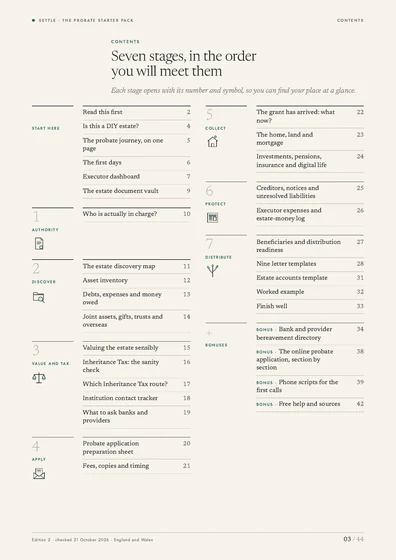
A 44-page printable toolkit to get organised and start probate yourself.

  • 25-step executor checklist
  • 9 ready-to-personalise letters
  • Excel estate accounts workbook
See what’s inside →

Instant download · 30-day full refund

Online workspace

Secure Workspace

£9.99

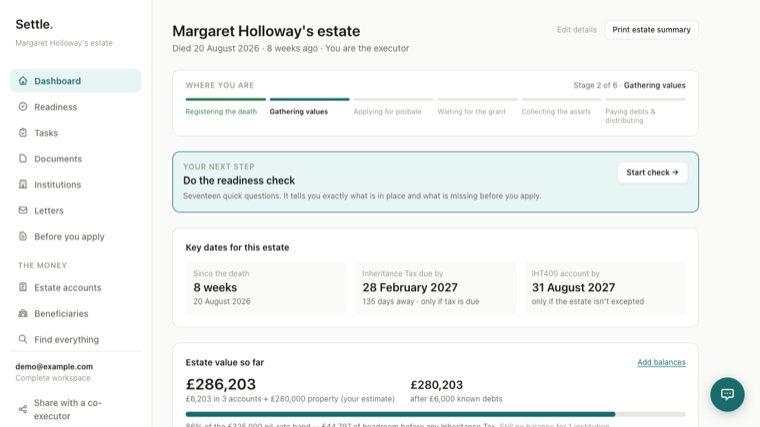
Keep every probate task, document and deadline organised online.

  • Your own secure probate Workspace
  • Track tasks, organisations and deadlines
  • Starter Pack included
See the Workspace →

or explore it free first →

One-off · no subscription · 30-day full refund · not legal advice