What Happens to a Council Tenancy When Someone Dies?
Checked against current GOV.UK probate and Inheritance Tax guidance for England & Wales (2026/27).
- A council tenancy usually ends on death unless there is a right to succeed.1
- A spouse, partner or qualifying family member living there may have succession rights.1
- Notify the council promptly; rent runs until the tenancy ends or is succeeded.1
- Where no one qualifies, the executor hands back the property and clears belongings.2
A council tenancy usually ends when the tenant dies, unless someone has the right to succeed to it — typically a spouse, partner or family member who lived there. Notify the council promptly either way.1
A council tenancy works very differently from a private tenancy after death. It cannot be left to someone in a will. The right to remain in the property depends entirely on whether a qualifying family member has succession rights – and only one succession is allowed per tenancy. If no one qualifies, the council will recover possession of the property.
Does the tenancy end automatically?
In most cases, a secure council tenancy ends on the death of the tenant. However, a qualifying family member may have the right to succeed to the tenancy – meaning they take it over in their own name. This is called statutory succession, and it is the only route by which someone can remain in the property after the tenant dies.
Succession rights are governed by the Housing Act 1985 (as amended). The rules are strict. Only one succession is allowed: if the deceased themselves succeeded to the tenancy (took it over from someone who died), there may be no further right of succession available. Check this with the council early.
Who can succeed to a council tenancy?
A spouse or civil partner who was living at the property as their only or principal home at the time of the tenant's death has an automatic right to succeed. This is the strongest form of succession right and the council cannot refuse it.
Other family members – including children, parents, siblings, and other relatives – may also qualify, but only if they lived at the property as their only or principal home for at least 12 months immediately before the tenant's death. The council has some discretion here, and some councils also extend rights to cohabiting partners who were not civil partners or spouses. Check the council's own tenancy agreement and succession policy.
A family member does not automatically get the same size property. If the property is significantly larger than they need, the council may offer them an alternative property to move to instead – this depends on the council's policy.
Notifying the council promptly
Contact the housing department of the relevant council as soon as possible after the death. This matters for several reasons. First, the council needs to know so that housing benefit (if applicable) can be stopped and council tax liability can be adjusted. Second, if the tenancy is ending, the council needs time to arrange recovery of the property. Third, if there is a potential successor, they need to make their claim – do not delay this.
Bring the death certificate when you contact the council (or send a certified copy). Ask them to confirm in writing what succession rights, if any, apply in this case. Get the reference number for the tenancy from any correspondence or rent payment records the deceased had.
When no one qualifies to succeed
If there is no qualifying successor, the council will seek possession of the property. This does not happen overnight – there is a legal process, and the executor has time to clear the property and hand back the keys.
As executor, you are responsible for removing the deceased's belongings from the property and leaving it in a reasonable condition. The council will usually give a reasonable period to do this – discuss the timeline with them directly. If you are struggling to arrange clearance quickly, tell the council and agree an extension in writing.
Any rent arrears at the date of death become a debt of the estate and must be paid before distribution to beneficiaries. Rent continues to accrue during the period the estate occupies the property, so again, act promptly to limit costs.
Belongings left in the property after the agreed handback date may be treated as abandoned. The council is not responsible for storing or returning them. Arrange clearance well in advance of any agreed handback date.
Handing back the property
When the property is cleared and ready, contact the council to arrange a final inspection and agree a handback date. Return all keys on that date and get written confirmation that the property has been accepted back. Keep this confirmation – it establishes the date on which rent liability ends.
The tenancy deposit rules that apply to private tenancies do not generally apply to council tenancies – councils do not typically take a deposit. However, if there are outstanding rent arrears or charges for damage, the council may pursue these against the estate.
Not sure what else you need to deal with as executor? Take the free Settle assessment for a personalised checklist of every step.
See also our guides on executor duties, who to contact after death, and private tenancies after death.
Not sure what you need to do next?
The free assessment gives you a personalised checklist of every step, in the right order.
Start free assessmentCommon mistakes to avoid
- Assuming family can automatically stay. Succession rights are limited and usually allow only one succession.1
- Delaying notice to the council. Rent continues until the tenancy is ended or succeeded.1
- Leaving belongings in the property. Clear them promptly to end the rent liability.2
Frequently asked questions
Does a council tenancy end when the tenant dies?
Usually yes, unless someone has the right to succeed to it — commonly a spouse, partner or family member who lived there.1
Who can take over a council tenancy?
Typically a spouse or civil partner, or another qualifying family member who lived in the property, subject to the tenancy terms and the law.1
How many times can a tenancy be succeeded?
Normally only once. If there has already been a succession, a further one is usually not possible.1
What if no one qualifies to succeed?
The executor notifies the council, ends the tenancy, clears the belongings and returns the keys.2
Who pays the rent in the meantime?
The estate, until the tenancy ends or passes to a successor, so notify the council promptly.1
Sources & references
The figures and rules in this guide are drawn from the official UK government pages below. Each link opens the relevant GOV.UK page. Always confirm current figures on GOV.UK before you act, as fees and thresholds can change.
- Dealing with the estate of someone who's died — GOV.UK
- What to do when someone dies: step by step — GOV.UK
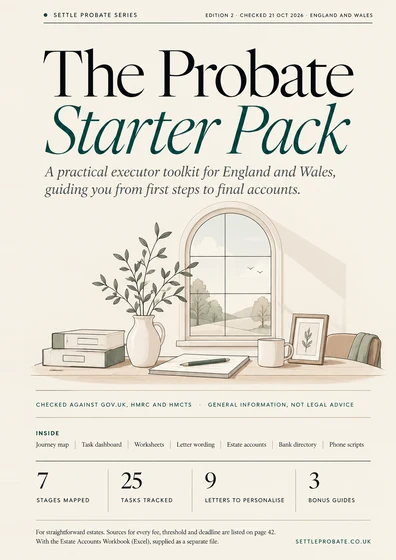
Starter Pack · £4.99 — a 44-page printable executor toolkit with a 25-step checklist, nine letters to personalise and an Excel estate accounts workbook.
See what’s inside →Free
Find out exactly what you need to do
Answer 7 questions and get a free probate assessment. No account needed.
Start free assessment →Secure Workspace · £9.99
Know what comes next, from the first phone call to the final estate accounts
Your own private account with a task list built from your answers, a bank and institution tracker, and estate accounts. Includes the Starter Pack.
See how the Workspace works →