Gifts and the 7-Year Rule Calculator
Annual, small and wedding exemptions · gifts oldest first against the £325,000 band · taper relief · who pays
Rules checked against GOV.UK and HMRC's gifts guidance on 26 November 2026 (how we check).
1. Date of death
2. The gifts
One line per gift. Leave unused lines blank.
Estimate only. Nothing you enter leaves this page.
Loading.
How the calculator works
- Exempt gifts come out first. Gifts to a spouse or civil partner who lives in the UK permanently, to charities and to political parties are exempt. So are regular gifts out of income that leave the giver able to meet their usual living costs, and small gifts of up to £250 per person, as long as no other allowance was used on that person.
- Wedding gifts. Up to £5,000 to a child, £2,500 to a grandchild or great-grandchild, or £1,000 to anyone else is exempt, and can be combined with the annual exemption.
- The annual exemption. £3,000 of gifts each tax year (6 April to 5 April), with any unused amount carried forward one year only. The calculator uses the current year's £3,000 first, then last year's leftover, and assumes any tax year with no gift listed had its £3,000 unused.
- The 7-year rule. What remains of each gift made in the 7 years before death is listed oldest first with a running total. Gifts use the £325,000 nil-rate band before anything else in the estate. Tax is due on the part of the gift that takes the total over the band, and on every later gift.
- Taper relief. On that excess, gifts in the 3 years before death are taxed at 40%; 3 to 4 years 32%; 4 to 5 years 24%; 5 to 6 years 16%; 6 to 7 years 8%. A death on the anniversary of a gift counts in the next band.
- Who pays. The person who received the gift pays its tax. Whatever band the gifts use up is no longer available to the estate.
Worked examples
1. The default figures: a death on 1 November 2026
£60,000 to a son on 10 February 2021: £6,000 of annual exemptions (2020 to 2021 and 2019 to 2020) leaves £54,000. £280,000 to a daughter on 1 May 2022: £6,000 of exemptions leaves £274,000, taking the running total to £328,000, £3,000 over the band; it was made 4 full years before death, so 24% applies: £720, paid by the daughter. £8,000 at a son's wedding on 15 August 2025: £5,000 wedding exemption plus £3,000 annual exemption, so nothing counts. The estate is left with no nil-rate band of its own.
2. HMRC's own example
HMRC's guidance lists gifts (after exemptions) by a man who died on 1 June 2021: £150,000, £100,000, £50,000, £30,000, £17,000 and £10,000. The running total passes £325,000 with the March 2017 gift of £30,000, so tax is due on £5,000 of it, and on all of the two later gifts. Tick "already after exemptions" and enter those dates to see the same result.
3. A gift that has just cleared
A gift of £400,000 made on 1 November 2019, by someone who dies on 1 November 2026, was made exactly 7 years before. Because a death on the anniversary counts in the next band, it falls outside the 7 years and is ignored.
What the calculator does not cover
- Gifts with reservation of benefit. Giving away a house but carrying on living in it rent-free means it still counts as part of the estate, at its value at death, however long ago the gift was made.
- Gifts into trusts. These follow different rules from outright gifts.
- Selling for less than value. Selling a house to a child below its market value is a gift of the difference.
- A late spouse's unused nil-rate band. The full Inheritance Tax calculator handles transferred bands.
Executors report lifetime gifts on HMRC's forms; where there were gifts with reservation, GOV.UK says that means form IHT400 with schedule IHT403. See our guide to the forms.
Sources
- How Inheritance Tax works: rules on giving gifts — GOV.UK (read 26 November 2026)
- Work out Inheritance Tax due on gifts — HMRC, GOV.UK (read 26 November 2026)
Frequently asked questions
How does the 7-year rule work for gifts?
Gifts to people are free of Inheritance Tax if the giver lives 7 years. If they die sooner, gifts made in the 7 years before death are added up, oldest first, and use the £325,000 nil-rate band before the estate does. Tax is due on the part over the band (HMRC: work out tax due on gifts).
What is taper relief?
For gifts made 3 to 7 years before death, the 40% rate is reduced to 32%, 24%, 16% or 8%. It only helps where the gifts in the 7 years add up to more than the £325,000 threshold (GOV.UK rules on giving gifts).
Who pays Inheritance Tax on a gift?
The person who received the gift pays the tax on it. Gifts that use up the nil-rate band also leave less of it for the rest of the estate, which can mean more tax for the executors to pay.
Can the £3,000 annual exemption be carried forward?
Yes, but only for one tax year. You use the current year's £3,000 first, then any amount left unused from the year before.
Facing the admin, not just the maths?
Once you know the numbers, the next job is organising the estate. Pick the level of help that suits you.

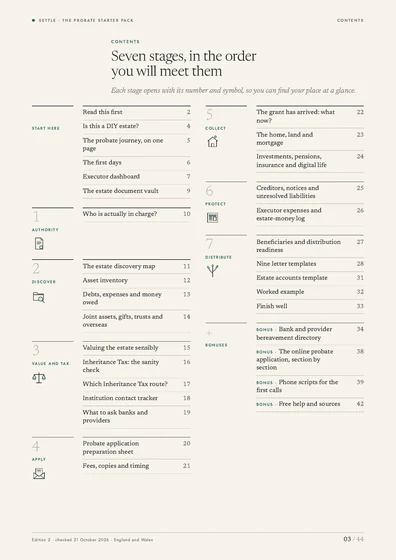
Starter Pack
£4.99
A 44-page printable toolkit to get organised and start probate yourself.
- 25-step executor checklist
- 9 ready-to-personalise letters
- Excel estate accounts workbook
Instant download · 30-day full refund
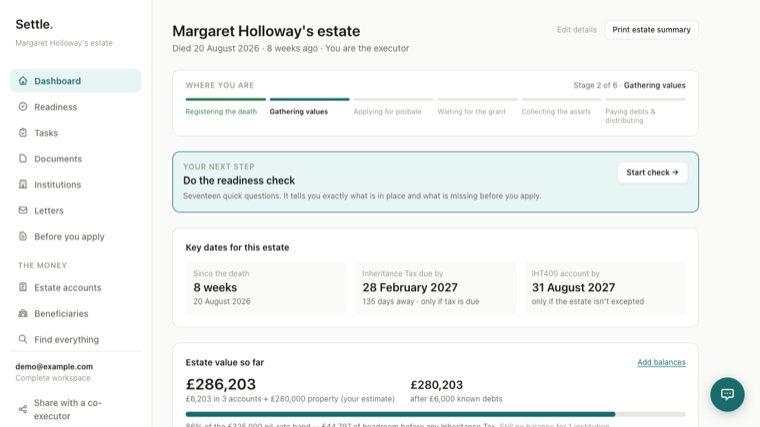
Secure Workspace
£9.99
Keep every probate task, document and deadline organised online.
- Your own secure probate Workspace
- Track tasks, organisations and deadlines
- Starter Pack included
One-off · no subscription · 30-day full refund · not legal advice