Letter to creditors after a death: free template
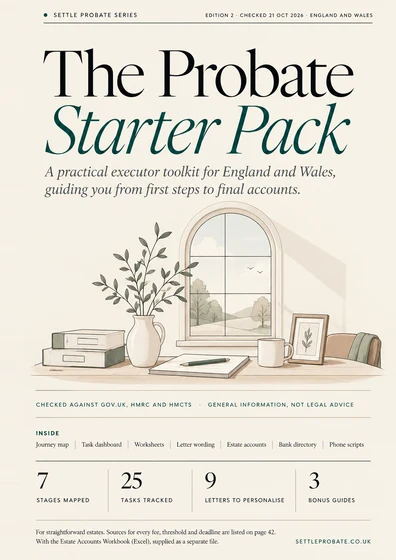
Checked against GOV.UK guidance for England & Wales. The letter wording is the same as in the Probate Starter Pack.
Quick answer: Send this letter to each company the person owed money to, such as a credit card, loan, overdraft or catalogue account. It asks for the amount owed at the date of death, including interest and charges, a final statement and payment instructions for the estate. It doesn't promise payment. GOV.UK says the executor must pay the person's debts from the estate, and warns that if you share out the estate and it then can't pay a debt, you may have to pay it yourself.
When to send it, and who to
- Who it goes to. Every lender or company the person owed money to. Check post, bank statements and email for regular payments to lenders.
- When. Once you know about the debt. Gathering every balance early tells you whether the estate can pay everything before anyone inherits.
- Who sends it. The executor, the administrator if there is no will, or the person dealing with the estate.
- Creditors you don't know about. GOV.UK says to place a notice in The Gazette giving creditors 2 months to claim, and not to distribute until the 2 months are up. An online deceased estates notice costs £96.55 plus VAT (The Gazette's 2026 price list).
The letter (free to copy)
Copy it into an email or a document, replace every [bracket] with your own details, and delete what doesn't apply.
[Your name]
[Your address]
[Date]

[Creditor name]
[Creditor address]

Subject: Estate of [name], deceased: request for balance

Dear Sir or Madam,

Please confirm the amount, if any, owed by [name] at the date of death [date], including any interest or charges, and provide a final statement and payment instructions for the estate. Please quote [reference].

Yours faithfully, [name]
What to enclose
- A copy of the death certificate, if the creditor asks for one.
- The account or reference number, so the letter is matched to the right account.
- Nothing that commits you personally. Don't give your own card or bank details, and don't agree to pay from your own money: the debt is the estate's.
Don't send original documents unless the organisation specifically asks for them. Keep a copy of the version you actually sent, the date, the reference number and the reply.
Common mistakes
- Paying debts from your own money. Debts are paid from the estate. Beneficiaries don't inherit the person's debts.
- Paying the first bills that arrive before you know the whole picture. If the debts may be more than the assets, they have to be paid in a set order, and paying the wrong one first can leave you personally liable.
- Sharing out the estate too soon. Wait until the debts and taxes are paid, or you are sure there is enough to pay them, and until 2 months after any Gazette notice.
- Not asking for interest and charges. The letter asks for the full amount owed at the date of death, so the figure in the estate accounts is complete.
- Losing track. Keep each statement, the date you wrote and every reference number.
Frequently asked questions
Am I personally responsible for the debts of someone who died?
Debts are paid from the estate, not from the family's own money, and beneficiaries don't inherit debt. As executor, though, GOV.UK warns you may have to pay a debt yourself if you distribute the estate and it then can't pay.
How do I find creditors I don't know about?
Check post, email and bank statements for payments to lenders. GOV.UK also says to place a notice in The Gazette giving creditors 2 months to claim, and not to distribute until the 2 months are up.
Should I pay a debt as soon as the final statement arrives?
Not until you know the estate can pay all its debts. If the debts may be more than the assets, they must be paid in a set order. Read our guide to insolvent estates before paying anything.
What if a creditor keeps phoning?
Ask them to write to you at the address in the letter, quote their reference on everything, and keep a note of each call.
Related guides
- Insolvent estates: what to do when debts exceed assets
- Section 27 notices in The Gazette
- Executor personal liability
More free letter templates
- Letter to a bank after a death
- Date-of-death valuation letter for shares and investments
- Letter to a pension provider or employer after a death
- Executor letters to beneficiaries
- Beneficiary receipt template
- Estate accounts template and layout
- All probate letter templates
Sources
- GOV.UK: Settling debts and taxes
- GOV.UK: Dealing with the estate of someone who's died
- The Gazette: deceased estates notices
General information for England and Wales, not legal advice. If the estate is complex, disputed or may not be able to pay its debts, take advice from a solicitor.